


Accurate measurement is at the heart of every reliable scientific discovery. Sometimes, scientific investigation reveals phenomena that are utterly baffling. Does light consist of particles or waves? The classic double slit experiment shows that light acts as both, and at the same time, as if a photon exists in two states simultaneously: one when being observed and the other when not.
Experiments concerning quantum entanglement show that two entangled particles behave in precisely the same way without there being any communication between them. Alter the spin of one, and the spin of the other changes in the same way instantaneously, no matter the distance between them. Both of these phenomena seem impossible, and they continue to defy explanation.
Surely there must be some error in experimental design, or some fault with the analytical procedures? But numerous repeated measurements at different times and in different laboratories around the world have come up with the same data. The measurements are accurate and repeatable, so the results must be believed, even if they challenge our concepts of the universe.
And the converse…
When dealing with comparatively mundane investigations in physiology and metabolism, the most problematic scenario is when an analytical tool, such as a gas sensor, gives inaccurate results of an inconsistent nature each time a known standard is measured. Low accuracy combined with low repeatability creates uncertainty, and good data can be lost in the fog of noise. That is why appropriate calibration methods are critical, and all possible environmental effects on sensor output must be considered and controlled.
Measurement Challenges in Biology and Environmental Science
Variations in temperature can create a great deal of difficulty in interpreting biological data. Not only does temperature affect the rates biochemical and physiological processes, but varying temperature can also affect the output of sensors measuring these processes. Changes in temperature can affect the electronic circuitry of a poorly designed analyser. Also, when measuring gas concentrations, changes in temperature can affect gas diffusion rates (e.g., through the membrane of a fuel-cell oxygen sensor), causing significant drift. This means that calibrations performed in a controlled laboratory environment may not hold true when the analyser is taken outdoors.
Atmospheric pressure is another problematic variable, as is relative humidity, since varying water content in a gas sample will displace more or less of the target gas being measured. While stable environmental conditions can be maintained in the lab, and especially in controlled-environment chambers, this is not possible in the field. It was amusing to see that a company selling a device for measuring human oxygen consumption showed pictures on their website of athletes using the instrument while playing field sports. However, the company was honest enough in the small print to state that their device should not be used outdoors!
Ensuring Reliable Data
Knowing the sources of error is only useful if you can do something about them. Fortunately, there are well-established approaches to maintaining measurement reliability under variable conditions.
To manage temperature-related drift, analyser circuitry can be temperature-controlled internally. The effects of varying humidity can be managed either by drying the gas before analysis, or by measuring water vapour concentration and applying appropriate corrections. Line pressure can be monitored and maintained, or corrections applied when it changes.
Perhaps most importantly, an analyser should allow for frequent recalibration during use, whether manually or automatically. This is not a sign that an instrument is unreliable, but that the instrument has been designed with real-world conditions in mind. The ability to recalibrate easily is a positive feature, not a limitation. Be very cautious if an instrument’s operating manual claims that calibration is not required. Calibrate anyway! Better that than having to ditch useless data.
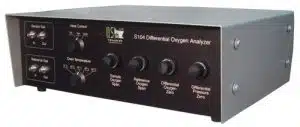
Much of the long-term responsibility for reliable data falls on the user. Following correct procedures, adhering to maintenance schedules, and replacing components with finite lifespans (such as oxygen fuel cells) when due, are all essential to keeping data trustworthy over time. Qubit’s S104-DOX Differential O₂ Analyser and wearable VOCO device for human cardiopulmonary exercise testing were designed with all of these considerations in mind, offering exceptional accuracy and resolution with simple and practical calibration and maintenance routines.
When Better Measurement Changes Everything
Sometimes, the most significant advances in science come from questioning whether accepted measurement methods produce accurate results.
Forty years ago, before Qubit existed, the Qubit founders were working in the field of nitrogen fixation. They were using a novel technique to measure nitrogenase activity noninvasively in legumes by monitoring the hydrogen gas produced as an obligate by-product of the nitrogenase enzyme during the reduction of nitrogen gas to ammonia.
The results were striking. Nitrogenase activities measured using this method were significantly higher than those obtained with the traditional acetylene reduction assay, the standard technique at the time. The new measurements indicated that the acetylene reduction assay could underestimate nitrogen fixation rates by up to 80 percent. Decades of conclusions about nitrogen fixation required re-evaluation (https://onlinelibrary.wiley.com/doi/abs/10.1111/j.1399-3054.1990.tb04414.x).
The explanation that emerged was equally significant. Researchers found that exposure to acetylene inhibits nitrogenase activity in nodules, meaning the assay actively interfered with the process it was designed to measure. Further investigation revealed that the physiological regulation of oxygen diffusion in root nodules plays a central role in controlling nitrogenase activity by limiting the rate of oxygen entry and, with it, the respiratory energy available for nitrogen fixation.
A flawed measurement method had been obscuring a fundamental biological mechanism. Using an alternative measurement method opened a new chapter in the understanding of nitrogen fixation physiology. Today, Qubit’s NF1LP Nitrogenase Activity Package is the only system capable of monitoring nitrogen fixation rates non-invasively and continuously, a direct descendant of that early commitment to better measurement.
What Makes an Instrument Reliable for Long-Term Research?
Reliability over the long term requires the same qualities as reliability in a single measurement: accuracy and repeatability. But sustaining those qualities over months and years adds another layer of consideration.
The instrument must maintain its performance over the time period during which it is used. Ease of calibration is critical. Routine maintenance must be practical and clearly defined. Components that will eventually wear out must be identified and replaced on schedule before they affect data quality.
At Qubit, we have had the satisfaction of hearing from laboratories that have been using our systems for more than twenty years without requiring significant maintenance or replacement. That kind of longevity does not happen by accident. It is the result of deliberate design choices made at the start of the process, not corrections applied after the fact. Many of our S151 CO2 analysers, for example, continue to be used reliably in research settings decades after they were purchased.
How Qubit Approaches Instrument Design
At Qubit Systems, the design process begins with a conversation. Before recommending any instrument, we work with the client to understand the specific requirements of their application. A laboratory instrument may differ substantially from one intended for field use. The range of the instrument must match the biological system being studied. An oxygen analyser suitable for measuring insect respirometry, for example, would not be appropriate for measuring the metabolic rate of a large mammal.
We discuss the user’s existing infrastructure and their experimental design. If we believe a different approach may give better results, we make suggestions based on experience and our background in scientific research. And critically, we are open and honest about the limitations of any instrument we provide.
To succeed as a scientific instrumentation company, we need our clients to succeed as scientists.
For more information about Qubit’s range of gas analysers and research instrumentation, visit qubitsystems.com.