


Women in science have long shaped discovery, collaboration, and innovation. Yet many of the people whose work has shaped modern medicine, technology, and environmental science remain far less recognized than they deserve. This is especially true for Black women scientists, whose contributions have often been foundational, but whose names are still missing from mainstream scientific narratives.
This February, Qubit Systems is taking a moment to highlight both pioneering Black women scientists whose work underpins entire fields, and rising leaders whose research continues to shape the future of science and innovation.
Pioneers Whose Work Changed Science
Some of the most important scientific breakthroughs of the last century were driven by Black women whose names remain unfamiliar to many outside academic circles.
Dr. Marie Maynard Daly was the first Black woman in the United States to earn a PhD in chemistry. Her research helped establish the link between cholesterol and heart disease, forming the basis of modern cardiovascular medicine. Despite the global impact of this work, her name is rarely mentioned in discussions of heart health.
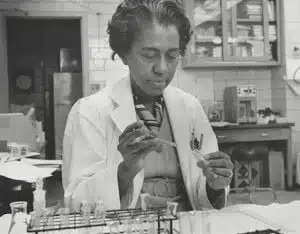
Dr. Ruth Ella Moore, the first Black woman to earn a PhD in a natural science, conducted critical research on tuberculosis and blood types at a time when Black scientists were systematically excluded from research institutions and publications.

In cancer research, Dr. Jane Cooke Wright pioneered the use of human tissue cultures to test chemotherapy drugs. Her methods are now standard practice in oncology, yet her contributions remain largely unrecognized outside the medical community.

Other innovators include Dr. Patricia Bath, whose invention of the Laserphaco Probe revolutionized cataract surgery worldwide, and Dr. Alexa Canady, the first Black woman neurosurgeon in the United States, whose leadership advanced pediatric neurological care.


Invisible Work Behind Modern Technology
Scientific impact is not always visible to the public, especially when it happens behind the scenes.
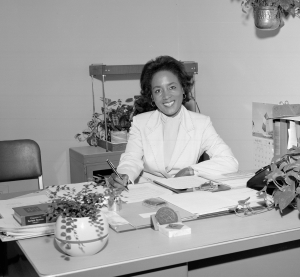
Annie Easley, a mathematician and computer scientist at NASA, helped develop software used in the Centaur rocket stage, supporting space missions for decades. Like many early space program contributors, her work was embedded within technical teams and remained uncredited for years.
More recently, Dr. Kizzmekia Corbett played a leading role in developing the NIH’s COVID-19 vaccine technology. Millions benefited from this research, yet public recognition focused largely on pharmaceutical companies rather than the scientists behind the science.

Rising Voices in Science Today
While many pioneers worked in isolation, today’s generation of Black women scientists is building visibility alongside discovery.
Researchers like Jheannelle Johnson, whose work explores neurodegeneration through computational biology, and Dr. Ciara Sivels, a nuclear engineer and educator, are expanding representation in fields where Black women remain underrepresented.
Others, such as Dr. Hadiyah-Nicole Green, are pushing precision medicine forward through innovative cancer treatments, while Dr. Jessica Esquivel and Dr. Nia Imara are advancing particle physics, astrophysics, and STEM outreach, ensuring the next generation sees a place for themselves in science.
Programs like the Rising Black Scientists Awards continue to spotlight early-career researchers across life, health, environmental, and physical sciences, helping ensure that emerging voices are recognized earlier than those who came before them.
Recognizing Women in Science at Qubit Systems
At Qubit Systems, we see firsthand how vital representation and leadership are within science and technology. On the International Day of Women and Girls in Science, we took the opportunity to recognize two outstanding members of our own leadership team.
Dr. Monika Kuzma, Chief Scientific Officer, has been with Qubit Systems for over fifteen years, bringing deep expertise, mentorship, and a passion for biological research that shapes our scientific direction. Billie Kearns, Head of Research and Development, has spent six years advancing innovation across our product development and research initiatives.


If you have met Monika or Billie at one of the many conferences and exhibitions they attend each year, you have likely experienced their enthusiasm for research and commitment to scientific excellence firsthand. Their leadership reflects the values Qubit strives to uphold every day.
Looking Forward
Recognizing Black women scientists is not about looking backward. It is about understanding how science progresses when talent, insight, and leadership are given space to thrive.
The work of these pioneers and rising researchers continues to shape medicine, technology, environmental science, and education. By sharing their stories, we help build a more accurate and inclusive picture of how scientific progress truly happens.
At Qubit Systems, we remain committed to supporting researchers, educators, and students across disciplines, and to celebrating the diverse voices that drive discovery forward.