



Heat dome events are becoming one of the most serious biological threats of our time.
As the UK begins to swelter under its third prolonged heatwave this year, with most of the summer still to come, it’s quite clear that things have changed more than a little since the summers of my youth when a heatwave was defined as a break in the cloud cover, and tabloid headlines exclaimed “Phew! What a Scorcher!” on those rare occasions the daytime temperature topped 20°C.
So, what’s going on?
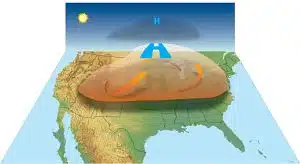
The easy answer is that a high-pressure system is trapping hot air over the region, much like putting a lid on a pot of boiling water. The harder answer is explaining why this is happening and why so frequently, but the most common explanations are (a) climate change due to fossil fuel exploitation; (b) abnormal solar activity, and (c) The Rapture.
Whatever the cause (and my money’s on the first answer), we all have to deal with the consequences, which, from a biological standpoint, are dire.
Effects on Human Health
Canada is extremely fortunate to have among its scientists Professor Glen Kenny, a full professor of physiology at the University of Ottawa who holds the University Research Chair in Human Environmental Physiology and is director of the university’s Human and Environmental Physiology Research Unit (HEPRU). Professor Kenny is a world authority on heat stress who has over 500 peer-reviewed papers to his credit, Professor Kenny runs an international hub for collaborative research on the greatest emerging threat to human survival — extreme heat and climate change.
Since Qubit Systems is working on the development of next-generation human metabolic chambers to assess the effects of environmental and other factors on physiological activity, I visited Professor Kenny in Ottawa and enjoyed a tour of his facility with its equipment for both direct and indirect calorimetry. Impressive is too weak a word to describe HEPRU and the research that is conducted there, some of which has been instrumental in changing legislation related to the periods and conditions under which employees in various workplaces are subjected to extraordinary heat load.
Dr. Kenny informed me that heat-related deaths are often ascribed to other causes, since the physiological effects of heat exposure often result in mortality many hours after the exposure period has ended.
As much as I enjoyed Professor Kenny’s company, his heat-stress warnings were chilling.
To learn more about Professor Kenny’s work, visit his faculty profile at the University of Ottawa. You can also learn more by watching his address to the British Columbia Lung Association on YouTube: Extreme Heat Events & Indoor Temperature Limits to Protect Vulnerable Populations.

Effects on Insects and Animals
While an elite class of wealthier humans has the opportunity to escape extreme temperature events in air-conditioned homes and workplaces, insects, animals (and the majority of humans), are less fortunate. Extreme heat events — including heat domes — cause many soil-dwelling insects and other invertebrates to retreat deeper into the soil or become less active near the surface. This can reduce the availability of prey for animals that feed by probing or digging in the topsoil. Earthworms move deeper into the soil during a heat event and return toward the surface afterward, and several insect groups, including ants, centipedes, and crickets, decline in abundance after a heat event (Gao et al., 2022).
Such migration is associated with both heat and water loss. Qubit Systems’ Q-Box RP1LP Low Range Respiration Package is relevant to such research and has been used in several studies related to insects’ responses to heat and water loss (e.g., Abbas et al., 2020).
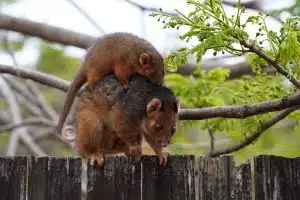
Some higher animals are facing extinction due to ongoing global warming. Using Qubit equipment to monitor respirometry, Dr. James Turner at Charles Sturt University in Australia measured the water loss, body temperature and metabolism of an Australian marsupial during a simulated heatwave. When ambient temperature crossed a threshold of 35–36°C, possums began actively cooling by increasing evaporative water loss and thermal conductance. With frequent or prolonged exposure to such high temperatures (a situation becoming more common) body water would rapidly deplete, placing the animal in danger of injury or death from dehydration (James M. Turner, 2020).

Not Forgetting Plants
Arguably, of all living organisms, plants have it worst when it comes to dealing with high temperatures and water loss, given that they are rooted, quite literally, to the ground. And, as primary producers in the food chain, when plant yields decline with elevated heat and resulting drought, world food security is put increasingly at risk. It is crucial, therefore, to maintain and increase funding for research related to enhancing the stress resistance of crops. After all, in the words of the much-mourned Tom Lehrer (April 1928 – June 2025) when singing sardonically about nuclear Armageddon, in the event of crop failure — We’ll All Go Together When We Go.
Qubit CEO, Dr. Steve Hunt, has been privileged to work as a technology advisor with the Global Institute for Food Security based at the University of Saskatchewan, and has been involved in numerous projects related to the development of next-generation crops with greater stress tolerance.
This work has involved studies at the leaf level, the whole plant level, the population level and the crop level, using Qubit’s Q-Box CO650 Plant CO₂ Analysis Package, imaging and non-imaging technologies for Plant Phenotyping, and field-deployed Hyperspectral and Solar-Induced Fluorescence Systems for monitoring crop canopies.
Oh Yes… the Oceans
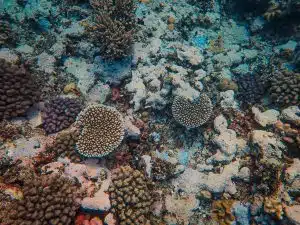
They may cover less than 1% of the ocean floor, but coral reefs support about 25% of all marine organisms at some point in their life cycle. As with plants, coral reefs, directly or indirectly, are a major source of food for hundreds of millions of people, as well as protecting coastlines from erosion, storm surge damage and flooding. Since 1998, the world has experienced multiple, global coral bleaching events, with more than 14% of coral cover lost, the greatest factors causing this catastrophe being increased ocean temperature and acidification.
Intensive research is being carried out to reverse coral loss and rehabilitate reefs, including the transplantation of heat-resistant corals. Qubit is assisting this work with the diver-deployed CISME system for monitoring coral photosynthesis, respiration and de(calcification) in situ.
Qubit’s Head of R&D, Billie Kearns, is exhibiting CISME at the International Coral Reef Society conference in New Zealand between Sunday 19th to Friday 24th July.
Please drop by the Qubit booth to chat with her if you are lucky enough to attend.