
Plant Phenotyping

Stress Screening

Nitrogen Status

Water Status

Disease Conditions

Pathogen Infection

Ecotoxicology

download Qubit Plant Phenotyping brochure click here.

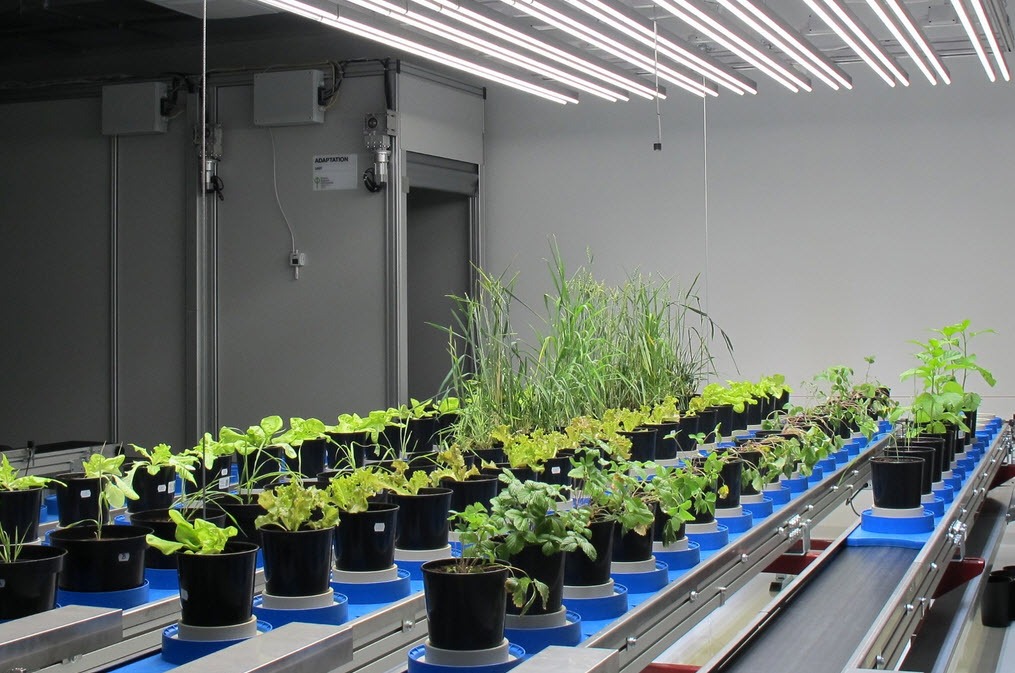
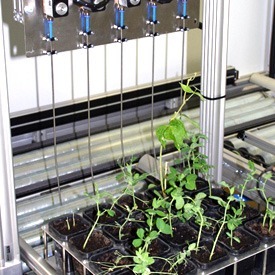
Qubit Systems provides Conveyor and Robotic PlantScreen ™ Systems for plant phenomics analysis.  From Arabidopsis to crop plants, the PlantScreen™ can be optimized for numerous plant morphologies and structures.  The conveyor system can be configured for single pots, multiple pots or trays, providing flexibility of use with numerous different species, or with a single species throughout its growth cycle. We ensure that PlantScreen™ systems meet your specific requirements.  Contact Qubit Systems today by clicking here.

PlanScreen™ Conveyor Systems:


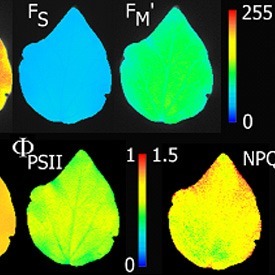
Chlorophyll Fluorescence

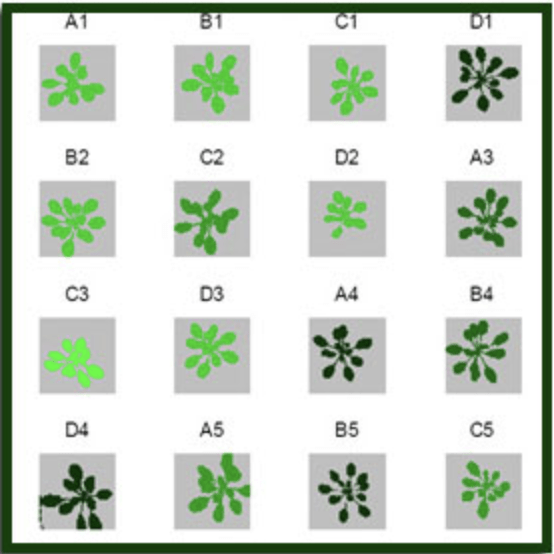
RGB Imaging

NIR Imaging

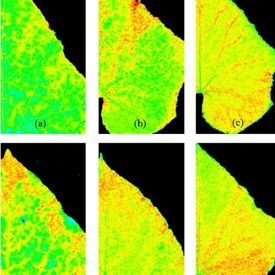
Hyperspectral Analysis

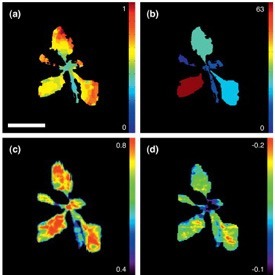
Thermal Imaging

Automated Watering and Weighing

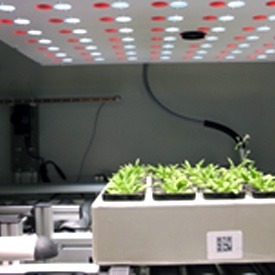
Conveyor systems allow for automated loading and unloading of samples, with tracking of pots and trays by barcode reader or RFID tags.  Conveyors may be enclosed by light equilibration chambers for control of actinic light exposure, or dark adaptation, prior to chlorophyll fluorescence imaging.  LED panels allow for precise control of irradiance at specific wavelengths, providing low to high light intensities without heat load, and the ability to create complex lighting protocols.  Infra Red LEDs provide user-determined heat load within the thermal imaging station.

PlantScreen™ Cabinet System:

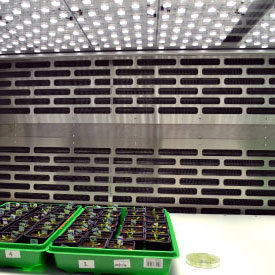
In cabinet-based screening systems the imaging apparatus is carried above the plants on a robotic arm.  The cabinet is fitted with LED lights to provide actinic irradiance and the saturating pulses required for chlorophyll fluorescence measurements.  The robotic arm moves from tray to tray or pot to pot, as well as vertically to optimize distance for imaging plants of difference heights.  Individual imaging areas can be selected to suit the sample size and configuration, ranging from 13 cm x 13 cm per imaging frame, to 35 x 40 cm per imaging frame.  Cabinet sizes can range from small units of 100 cm length, to entire growth rooms. Cabinets and rooms can be fitted with complete climate control (temperature, RH, irradiance protocols), and gas regulation options (pO2 and pCO2).

Screening Systems from the FluorCam Family:

The Z240 Rover FluorCam is designed for large-scale screening in the field. Large plants (e.g. corn, soybean) can be studied in situ without detaching or destroying them. The camera and light panels can be enclosed in a cabinet for dark adaptation and control of actinic light. Scanning area and height can be adjusted.  Chlorophyll fluorescence, true-color analysis, thermal imaging and NIR options are available.

The Z200 Open FluorCam is a modular instrument with flexible geometry. The LED panels and the light sources can be arranged at
various angles and distances from the sample. The position of
the camera may also be adjusted  The maximum area for
imaging depends  on the size of selected light sources.

The Z100 Closed FluorCam is a highly innovative  multispectral kinetic fluorescence imaging system. The imaging area is 13 x 13 cm – suitable for small plants, detached leaves, algal dilutions, tissue culture calluses, seeds etc. The system allows for dark adaptation, and a filter wheel allows measurement of GFP and other florescence compounds.

ALSO AVAILABLE:

Custom-designed systems can be configured to user’s specific requirements.  All FluorCam systems include
a high-performance PC and comprehensive software package.

Software:

• Controls all mechanical and imaging aspects of the system, either by PCL based systems for engineering control and PC/Linux based systems for analysis, or with PC control for all systems.

• Includes default protocols for all measurements, with development kit to allow the user to create customized protocols.

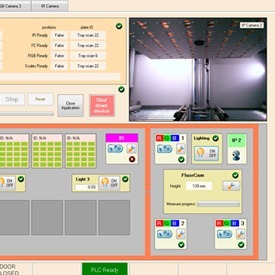
• Automatically controls movement of pots or trays through the system for each imaging station, activates cameras and captures image data to an SQL database.

• Allow any one or all of the imaging stations to be utilized depending on the requirements of the experiment.

• RGB digital growth analysis from 3 camera views, including thresholding and color analysis.

• For chlorophyll fluorescence imaging, software allows batch analysis of images for fluorescence quenching parameters including user-identified regions of interest and averaging of pixel values on background subtracted images.

• Analyzed data are stored in the database with co-registration of raw image data and analyzed data.

• For FIR images, 16 bit heat bitmaps are exportable directly to MATLAB or utilized by vendor software to produce false colour images of temperature.  Average temperature of user -defined areas are reported, or average temperatures of plants batch processed from thresholded temperature maps are recorded.

• A flexible Windows type graphical user interface is provided .

Features and specifications of the PlantScreen™ hardware and software have been developed in consultation with plant scientists in Canada, Australia, the Czech Republic and the United Kingdom.  Clients for our  imaging systems include:

  • The High Resolution Plant Phenomics Centre, Canberra
  • The Australian National University
  • BASF
  • Monsanto
  • Pioneer-Dupont
  • Purgenesis

and numerous other companies, research institutes and universities worldwide.

To download Qubit Plant Phenotyping brochure click here.